

Disclosure: This is not financial advice. A comparison of two metals is not a forecast.
Introduction
Platinum vs palladium is a comparison of two platinum-group metals that often sit in the same ore and often end up in the same kind of car part. They are not gold, and they are not silver. Each has its own quote, its own mine supply, and its own line in a U.S. Geological Survey summary. This page explains how to tell the two names apart and how to read those summaries. It does not pick a metal to buy.
Start with the USGS account of the group: platinum-group elements, and with the minerals center that publishes the commodity summaries: National Minerals Information Center. Copy any share, reserve, or production rank from the edition you open. This article does not freeze a percent.
What the two names mean
Platinum and palladium are members of the platinum-group metals, together with rhodium, ruthenium, iridium, and osmium. The USGS describes these elements as geochemically similar and often found together. That family resemblance is why a beginner hears them as a pair. Platinum vs palladium still requires two rows, because a price for one is not a price for the other.
Both metals are used in catalytic converters, the parts that treat vehicle exhaust. USGS commodity summaries describe autocatalysts as a principal use. Jewelry, electronics, dental alloys, and chemical processes also appear in those summaries, and the mix is not identical for the two metals. Read the use paragraph for each metal in the summary year you have. Do not borrow platinum’s jewelry sentence and paste it onto palladium.
How the car uses differ
Gasoline engines and diesel engines have both used platinum-group metals in converters. Summaries discuss palladium especially in gasoline systems and platinum in a broader set of uses that includes diesel systems, jewelry, and industry. Carmakers have also substituted one metal for the other when prices and chemistry allow. The USGS notes that substitution. The practical reading is simple: a headline about autocatalyst demand is incomplete until it says which metal and which engine family.
A battery-electric car does not use a tailpipe converter in the way a gasoline car does. Hybrids still have exhaust systems. A forecast that electric cars end demand is a story about a future fleet, not a line in today’s summary. If you mention vehicles, name the agency or the automaker source, and keep it separate from the metal quote.
Where the mines are
USGS summaries name South Africa and Russia among the leading mine sources for platinum-group metals, with other countries producing smaller amounts. The publication on platinum-group elements discusses how concentrated that mine supply has been over time. The concentration figure belongs on that page. Repeat it only with the page’s year in your note.
Concentration matters because a power cut, a labor stoppage, or a trade restriction in one of those countries can change supply without any change in car sales. Platinum vs palladium can diverge in that moment if one metal depends more on one country’s mines than the other. The summary’s country table is the check. A social post about a mine is a clipping until it names the operator or the survey.
Recycling is the other supply. Converters, jewelry, and electronics are melted and the metals are recovered. Recycled metal is supply. It is not a second kind of demand. When a report adds mine output and recycled output, keep the two labels.
Two quotes, not one precious price
Each metal has spot assessments and futures months. Platinum vs palladium is unfinished if you write one number called the precious price. Record the metal name, the source of the quote, and the time. If the screen is a futures month, record the month. Contract size and the minimum price change live on the exchange specification. This article does not print them.
The CFTC explains futures in futures market basics. A fund that says it holds platinum or palladium is a security. The prospectus names the metal and the costs. Investor.gov is the place to start on funds and risk. Check a firm in NFA BASIC before you send money.
What actually moves the comparison
Vehicle production changes how many converters are built. Emissions rules change how much metal a converter uses. Substitution changes which metal the converter uses. Mine and recycle supply change how much metal is available. Investment products change how much metal is held off the factory floor. Each of those is a separate document. Platinum vs palladium becomes a clear note when each document is dated and labeled with one metal.
Interest rates and the dollar show up in commentary about precious metals. They are not platinum-group statistics. If you add them, cite the series, such as a Treasury or statistical-agency release, and do not treat them as a USGS line.
How to read a summary
Open the current USGS platinum-group summary. Find the paragraph on uses. Write platinum’s uses and palladium’s uses in separate sentences. Find the country table. Write the leading mine countries the table names for each metal. Find any sentence on substitution or on recycling and copy the claim in the summary’s words, with the year.
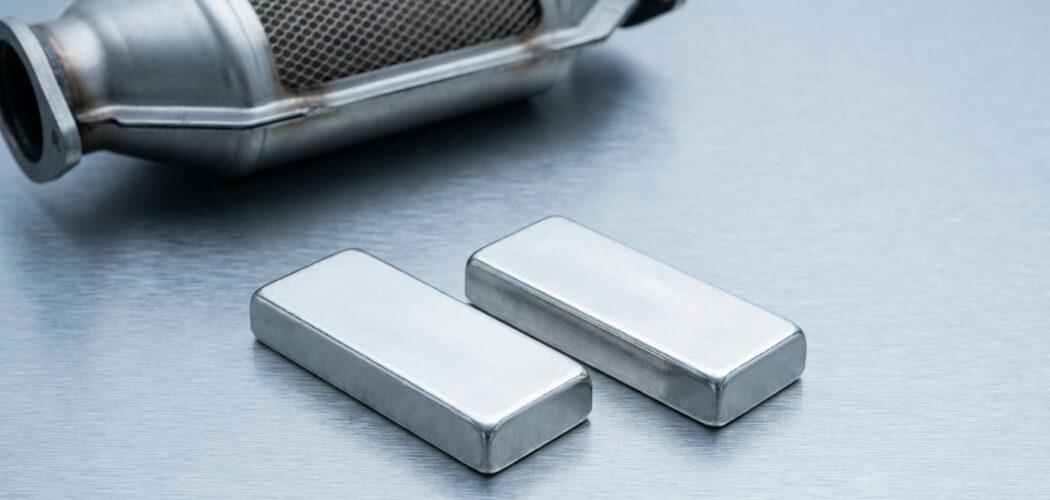
Then open one quote for each metal from the same publisher at the same time. The gap between them is a subtraction you can show. A remembered gap is not. Platinum vs palladium, as a beginner’s comparison, is done when those two USGS sentences and those two quotes exist. A bar photo does not finish it.
Risks that are properties of the market, not promises
These markets are smaller than the gold market, so a given order can move the screen more than a newcomer expects. That is a reason to read the contract and the spread on the ticket, not a measured volatility statistic. This page does not print a volatility number.
Industrial use means a quiet auto year can matter more here than it does for a metal held mostly as jewelry or reserves. Technology can change the converter. Those are qualitative risks described in commodity summaries. They are not a prediction that demand disappears on a date.
Physical bars and coins can trade at a premium to a screen price. The premium is whatever the dealer sheet says today. It is not a fact this article can set.
A short study plan
Week one, read the USGS group publication and the latest commodity summary. Write two use sentences and two country sentences. Week two, record one quote for each metal on the same day. Week three, read one news note about vehicles or mines and attach it only if it names a metal. Week four, reread your four sentences and delete any percent you cannot point to on a page.
Posts that promise a ratio will snap back are clippings. The CFTC warning is Understand Risks and Markets before Reacting to Internet Hype.
Common confusions
The first confusion is treating the platinum group as one price. Rhodium is a third metal with its own quote.
The second confusion is a production share copied from memory. The USGS page has the year’s figure.
The third confusion is calling recycled metal demand.
The fourth confusion is a commission link offered as the guide. The guide is the geological survey.
The fifth confusion is a health claim. A converter is an emissions device described by regulators and manufacturers. This page does not give medical advice and does not set an emissions standard.
FAQ
What is platinum vs palladium?
It is a comparison of two platinum-group metals that share ore deposits and catalytic-converter demand, and that still have separate uses, mines, and prices.
Are they mostly industrial?
USGS summaries describe autocatalysts as a leading use, with jewelry and other industrial uses also listed. Read the edition for the balance.
Which countries mine them?
USGS summaries put South Africa and Russia among the leading sources. Confirm the order on the table you open.
Can carmakers switch between them?
Summaries discuss substitution in converters when prices and formulations change. The switch is a manufacturer’s decision, not an automatic rule.
Does this page say which metal to buy?
No. This is not financial advice.
Conclusion
Platinum vs palladium means two metals, two use paragraphs, and two quotes. Both belong to the platinum group, and both are tied to catalytic converters, with mines concentrated in a few countries the USGS names. The comparison is finished when those documents are dated. It is not finished by a forecast. This is not financial advice.