
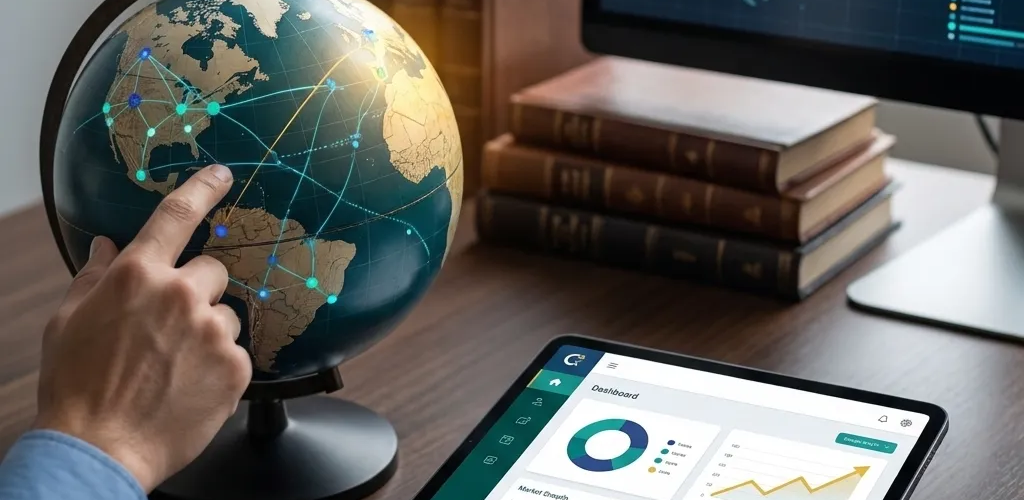
Professional traders understand that commodity markets are rarely insulated from global events. Geopolitical Commodity Risks are not abstract concepts; they are tangible forces that reshape supply chains, influence demand, and trigger price volatility across the spectrum from energy to agriculture. For the Alpha Seeker, simply reacting to headlines is insufficient. A proactive, data-driven approach is essential to not only mitigate these risks but also to identify strategic opportunities that emerge from uncertainty.
The global landscape is constantly shifting, consequently impacting the fundamental drivers of commodity prices. These shifts necessitate a sophisticated understanding of how political decisions, international relations, and regional instabilities translate into market movements. Therefore, a robust framework for analyzing these external factors is paramount for maintaining a competitive edge.
Understanding Geopolitical Commodity Risks
Geopolitical events, whether trade disputes, regional conflicts, or shifts in international alliances, create ripple effects that can be tracked through specific commodity data points. Consider the impact of sanctions on oil exports, which can immediately tighten global supply and drive crude prices upwards. Conversely, a resolution to a conflict might ease shipping routes, depressing freight costs and impacting the delivered price of various goods. Advanced analytics allow us to move beyond anecdotal evidence, identifying correlations between specific political indicators and commodity price movements. By analyzing historical data, including political stability indices, trade flow alterations, and sentiment analysis from relevant news sources, traders can develop models that forecast potential market shifts with greater precision. This isn’t about predicting the future with certainty, but rather quantifying probabilities and preparing for various scenarios.
For instance, an unforeseen dispute between major trading blocs can dramatically alter demand patterns for industrial metals. Similarly, agricultural commodities are highly susceptible to policy changes in key exporting or importing nations. Consequently, monitoring these political undercurrents provides a significant informational advantage.
Integrating Predictive Models for Market Edge
Developing an edge in markets exposed to geopolitical commodity risks requires integrating predictive models into your trading framework. This involves leveraging social intelligence tools to gauge early sentiment, combining satellite imagery for supply chain monitoring, and employing machine learning to analyze vast datasets of geopolitical news and policy changes. The goal is to identify early warning signals that precede major price movements. For instance, an uptick in discussions around specific trade policies might signal future tariff implementations, allowing a trader to adjust positions in affected commodities like rare earths or agricultural products before the broader market reacts. This layered intelligence provides a distinct advantage, transforming potential threats into actionable insights. It’s about understanding not just what is happening, but why it matters to your portfolio and how to position accordingly.
Predictive models, moreover, are not static. They must continuously adapt to new information and evolving geopolitical realities. Therefore, real-time data ingestion and iterative model refinement are crucial components of this strategy. This dynamic approach ensures that traders are always working with the most current and relevant insights.
The Evolving Landscape of Global Instability and Commodity Impact
The interconnectedness of the global economy means that a seemingly localized event can have far-reaching consequences for commodity markets. For example, a political upheaval in a major mining nation can disrupt the supply of critical minerals, affecting industries worldwide. Similarly, shifts in trade agreements or the imposition of tariffs can reshape global trade flows, consequently altering demand and supply dynamics for numerous commodities. Understanding these intricate relationships is fundamental to managing commodity market volatility.
In fact, the interplay between political stability and commodity prices is a well-documented phenomenon. Historically, periods of heightened international tension have often coincided with spikes in energy prices or safe-haven assets like gold. However, the modern trading environment demands a more granular analysis than simply observing these broad trends. It requires pinpointing specific catalysts and their direct, quantifiable impact.
Data Sources for Geopolitical Analysis
To effectively analyze geopolitical factors, traders must access a diverse array of data sources. These include official government reports, international organization publications, reputable news outlets, and specialized geopolitical intelligence platforms. Furthermore, the rise of alternative data sources, such as satellite imagery and social media sentiment, offers unprecedented opportunities for early detection of potential disruptions. For instance, monitoring shipping traffic in key waterways can provide early indications of supply chain issues, while tracking public discourse can reveal shifts in policy sentiment.
Consider the recent discussions around OPEC quotas; such news directly impacts global oil supply. Traders who access and analyze these early signals, perhaps from sources covering Iraq’s stance on OPEC quotas, are better positioned to anticipate market movements. This proactive stance contrasts sharply with a reactive approach.
The Role of Quantitative Analysis in Mitigating Geopolitical Commodity Risks
Quantitative analysis plays a pivotal role in translating qualitative geopolitical information into actionable trading signals. By employing statistical methods and machine learning algorithms, traders can identify patterns and correlations that might otherwise go unnoticed. This involves building models that can assess the probability of specific geopolitical events occurring and their potential impact on commodity prices. For example, a model might analyze historical data to determine how often a particular type of trade dispute leads to a measurable shift in agricultural commodity prices.
Moreover, stress testing portfolios against various geopolitical scenarios allows traders to understand their exposure to potential shocks. This proactive risk management is crucial for protecting capital in volatile markets. Consequently, quantitative strategies provide a framework for making more informed decisions, even in the face of uncertainty. The objective is to quantify, as much as possible, the potential upside and downside of various geopolitical outcomes.
Advanced Tools for Monitoring Global Events
The modern trader has access to an array of advanced tools designed to monitor global events and their potential impact on commodity markets. These include AI-powered news aggregators that can identify emerging geopolitical trends, geospatial intelligence platforms that track physical supply chain disruptions, and sophisticated econometric models that forecast price movements based on a multitude of political and economic indicators. These tools empower traders to move beyond traditional news feeds and gain a deeper, more nuanced understanding of the forces at play.
For example, tracking a country’s economic indicators through a comprehensive platform can offer early insights into potential policy shifts that might affect commodity demand. Furthermore, specialized platforms can analyze the sentiment expressed in diplomatic statements or international agreements, providing a forward-looking perspective on future relations. This level of detail is invaluable for Alpha Seekers.
Applying Social Intelligence to Anticipate Market Shifts
Social intelligence, often derived from analyzing vast amounts of public data, offers a unique lens through which to anticipate market shifts driven by geopolitical factors. By monitoring discussions across social media, forums, and specialized communities, traders can identify early indicators of public sentiment, policy debates, or even nascent social movements that could eventually impact commodity markets. This is particularly relevant for understanding consumer behavior shifts or public reactions to government policies, which can indirectly influence demand for various commodities.
For example, an increase in online discussions about environmental policies in a major industrial nation could signal future regulations affecting energy or carbon markets, such as those related to predictive carbon credit insights. This proactive monitoring allows traders to position themselves ahead of the curve, capitalizing on insights before they become widely recognized market drivers. Social intelligence, therefore, adds another layer of foresight to commodity trading strategies.
Case Studies in Geopolitical Commodity Risks
Examining historical instances where geopolitical events significantly impacted commodity markets provides valuable lessons. For example, trade tensions between major economic powers have frequently led to volatility in agricultural commodities, as tariffs and quotas disrupt established trade routes. Similarly, regional conflicts in oil-producing regions have consistently triggered spikes in crude oil prices, underscoring the sensitivity of energy markets to political instability. These case studies highlight the importance of understanding the specific mechanisms through which geopolitical events translate into market movements.
Consider, for instance, the impact of diplomatic disputes on specific national economies. News about a Swiss President meeting a US official amid a tariff spat would immediately flag potential shifts in trade dynamics for affected commodities. Analyzing these past events allows traders to identify recurring patterns and develop more robust predictive models. Therefore, historical analysis is not merely an academic exercise; it is a practical tool for enhancing future trading performance.
Developing a Resilient Trading Strategy Amidst Global Uncertainty
A resilient trading strategy for navigating geopolitical commodity risks must incorporate multiple layers of defense and offense. This includes diversifying portfolios to reduce exposure to specific geopolitical flashpoints, implementing robust risk management protocols, and maintaining flexibility to adapt to rapidly changing circumstances. Furthermore, continuously updating one’s understanding of global political dynamics is essential for staying ahead of potential threats. The goal is to build a framework that can withstand unexpected shocks while also identifying opportunities that arise from market dislocations.
For instance, while gold is often seen as a safe haven, even its price can be influenced by geopolitical factors, as evidenced by recent trends where gold’s RSI hit 18.8 in a downtrend. A resilient strategy acknowledges these complexities and builds in contingencies. This holistic approach ensures that traders are prepared for a wide range of outcomes, enabling them to navigate even the most turbulent market conditions with confidence.
The Importance of Continuous Monitoring and Adaptation
The geopolitical landscape is dynamic, meaning that strategies for managing geopolitical commodity risks must also be dynamic. Continuous monitoring of global events, coupled with a willingness to adapt trading positions, is crucial for long-term success. This involves regularly reviewing and updating predictive models, reassessing risk exposures, and staying informed about emerging political and economic trends. Traders who remain agile and responsive to new information are best positioned to capitalize on opportunities and mitigate threats.
Moreover, the ability to quickly process and act upon new information is a distinct competitive advantage. Therefore, investing in technologies and analytical capabilities that facilitate rapid decision-making is paramount. This commitment to continuous improvement ensures that traders can maintain their edge in an ever-changing world.
Conclusion: Mastering Geopolitical Commodity Risks for Alpha Seekers
Ultimately, mastering geopolitical commodity risks is about foresight. By embracing a data-centric methodology, Alpha Seekers can translate global complexities into refined trading strategies, maintaining agility and capturing value where others see only uncertainty. The ability to anticipate, analyze, and strategically respond to geopolitical events is no longer a luxury but a necessity for sophisticated investors. This approach empowers traders to transform potential threats into tangible opportunities, fostering a more robust and profitable trading experience.
The future of commodity trading belongs to those who can effectively integrate geopolitical intelligence into their decision-making processes. This requires a commitment to advanced analytics, continuous learning, and a proactive mindset. By doing so, traders can not only navigate the inherent volatility of commodity markets but also consistently generate alpha, distinguishing themselves in a crowded field.
FAQ
What are the primary drivers of commodity market volatility related to global events?
The primary drivers include trade disputes, regional conflicts, shifts in international alliances, sanctions, and changes in government policies. These events can directly impact supply chains, demand patterns, and the cost of production or transportation for various commodities.
How can data analytics help in predicting the impact of political events on commodity prices?
Data analytics helps by identifying correlations between political indicators and commodity price movements. By analyzing historical data, political stability indices, trade flow alterations, and sentiment analysis from news sources, traders can develop models to forecast potential market shifts with greater precision.
What types of advanced tools are available for monitoring global events for commodity traders?
Advanced tools include AI-powered news aggregators, geospatial intelligence platforms that track supply chain disruptions, and sophisticated econometric models. These tools provide real-time insights into emerging geopolitical trends and their potential market implications.
Why is continuous monitoring and adaptation important for trading strategies in politically sensitive markets?
The global political landscape is constantly evolving, making continuous monitoring and adaptation crucial. Traders must regularly review and update their predictive models, reassess risk exposures, and stay informed about new trends to remain agile and responsive to rapidly changing circumstances, thereby maintaining their competitive edge.
Can social intelligence provide early warnings for commodity market shifts due to political factors?
Yes, social intelligence can provide early warnings. By monitoring discussions across social media and specialized communities, traders can identify early indicators of public sentiment, policy debates, or social movements that could eventually impact commodity markets, allowing them to position themselves proactively.