

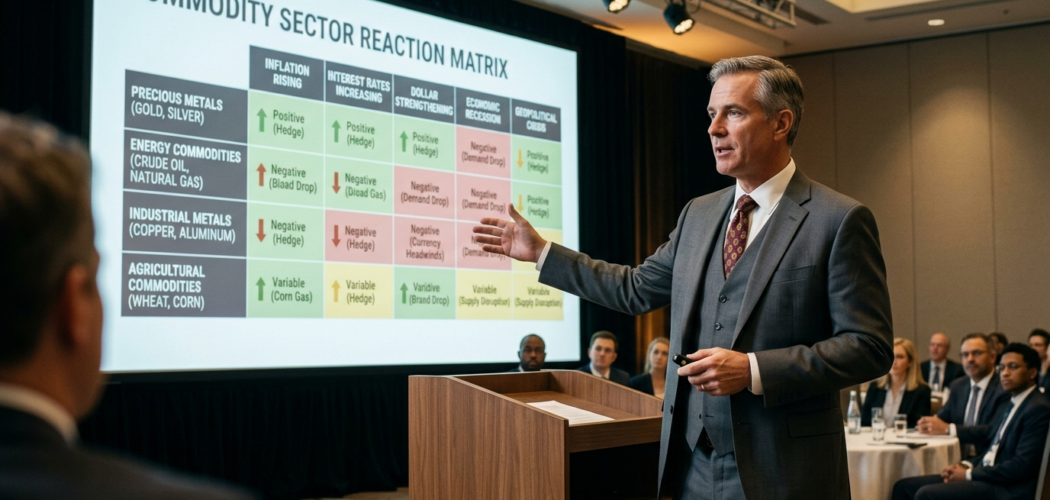
Understanding how commodities react to market changes is essential for anyone looking to invest or trade effectively. Unlike stocks or bonds, commodities are directly tied to real-world supply and demand. Because of this, their prices respond quickly to economic shifts, geopolitical events, and environmental conditions. This responsiveness can create both opportunity and confusion for investors.
At the same time, not all commodities behave the same way. While some rise during economic growth, others perform better during uncertainty. When you learn how commodities react to market changes, you begin to see patterns that help you make more informed decisions. This knowledge transforms market movements from unpredictable noise into meaningful signals.
The Core Drivers Behind Commodity Movements
To understand how commodities react to market changes, it is important to start with the fundamentals. Supply and demand are the primary forces that influence commodity prices. When supply decreases or demand increases, prices tend to rise. Conversely, when supply increases or demand falls, prices often decline.
For example, if oil production is disrupted, supply tightens and prices increase. Similarly, strong economic growth can boost demand for metals, pushing prices higher. These relationships form the backbone of commodity market behavior.
In addition, external factors such as currency fluctuations and interest rates also play a role. These influences can amplify or moderate price movements, depending on the situation. By recognizing these drivers, you gain a clearer understanding of how markets function.
How Precious Metals Respond to Uncertainty
One of the clearest examples of how commodities react to market changes is seen in precious metals. Gold and silver are often considered safe-haven assets, meaning they perform well during periods of uncertainty.
For instance, when stock markets decline or geopolitical tensions rise, investors often shift their money into gold. This increased demand pushes prices higher. In contrast, during strong economic growth, demand for safe-haven assets may decrease, leading to lower prices.
At the same time, inflation also affects precious metals. As currencies lose value, gold often becomes more attractive as a store of wealth. This relationship highlights why precious metals behave differently from other commodities.
Energy Commodities and Economic Activity
Energy commodities provide another perspective on how commodities react to market changes. Oil and natural gas are closely tied to economic activity. When economies expand, demand for energy increases, driving prices higher.
For example, increased industrial production and transportation require more fuel. This demand pushes energy prices upward. Conversely, during economic slowdowns, demand decreases, leading to lower prices.
In addition, geopolitical factors play a significant role in energy markets. Political tensions in oil-producing regions can disrupt supply, causing sudden price spikes. These factors make energy commodities highly responsive to both economic and political changes.
Agricultural Commodities and Environmental Factors
Agricultural products offer a unique example of how commodities react to market changes. Unlike other commodities, they are heavily influenced by environmental conditions such as weather and climate.
For instance, droughts can reduce crop yields, leading to higher prices. Similarly, favorable weather conditions can increase supply, which may lower prices. These factors create seasonal patterns that are distinct from other markets.
At the same time, global demand for food continues to grow with population increases. This ongoing demand supports long-term price trends. However, short-term fluctuations are often driven by environmental variables.
Industrial Metals and Global Growth Trends
Industrial metals such as copper and aluminum illustrate another dimension of how commodities react to market changes. These metals are widely used in construction, manufacturing, and technology. As a result, their demand is closely linked to economic growth.
For example, when infrastructure projects increase, demand for metals rises. This demand pushes prices higher. Conversely, during economic downturns, reduced construction activity leads to lower demand and prices.
In addition, technological advancements can influence demand for specific metals. For instance, the growth of renewable energy increases demand for copper and lithium. These trends shape long-term market behavior.
Currency Movements and Commodity Prices
Currency fluctuations are an important factor in how commodities react to market changes. Most commodities are priced in major currencies such as the US dollar. Therefore, changes in currency value can impact demand and pricing.
When the dollar weakens, commodities become cheaper for foreign buyers. This often increases demand and pushes prices higher. On the other hand, a stronger dollar can reduce demand, leading to lower prices.
This relationship highlights the interconnected nature of global markets. By monitoring currency trends, you gain additional insight into commodity price movements.
Investor Behavior and Market Sentiment
Another key aspect of how commodities react to market changes is investor sentiment. Markets are influenced not only by data but also by perception and expectations. As a result, prices can move based on how investors feel about the future.
For example, during times of uncertainty, investors may seek safety in gold or other stable assets. This behavior drives prices higher. Conversely, optimism about economic growth can increase demand for industrial commodities.
In addition, speculative trading can amplify price movements. Large volumes of buying or selling can create momentum, leading to sharper fluctuations. Understanding this dynamic helps explain sudden market changes.
Short-Term Versus Long-Term Reactions
When analyzing how commodities react to market changes, it is important to distinguish between short-term and long-term movements. Short-term reactions are often driven by news events, while long-term trends reflect broader economic factors.
For instance, a sudden political event may cause immediate price spikes. However, long-term trends depend on supply cycles, technological changes, and global demand. By separating these perspectives, you gain a more balanced understanding.
At the same time, focusing only on short-term movements can lead to impulsive decisions. A long-term approach helps you stay grounded and avoid unnecessary risks.
How to Use These Insights in Your Strategy
Understanding how commodities react to market changes is only valuable if you can apply it effectively. One practical approach is to align your strategy with market conditions. For example, during economic growth, focusing on industrial commodities may be beneficial.
In addition, diversification across different commodity types helps reduce risk. By combining metals, energy, and agricultural assets, you create a more balanced portfolio.
Monitoring key indicators such as economic data, weather patterns, and geopolitical developments also improves decision-making. These insights help you anticipate changes rather than react to them.
Avoiding Common Misinterpretations
Many investors misunderstand how commodities react to market changes, which leads to mistakes. One common error is assuming that all commodities move together. In reality, each type responds to different factors.
Another mistake is ignoring context. Price movements should be analyzed alongside underlying causes. Without this context, it becomes difficult to interpret market behavior accurately.
In addition, reacting too quickly to short-term changes can result in poor decisions. Instead, focusing on broader trends provides a clearer perspective.
Conclusion
Learning how commodities react to market changes provides a powerful advantage in navigating financial markets. By understanding the unique behavior of different commodities, you can identify opportunities and manage risk more effectively. While markets may seem complex, recognizing the underlying patterns brings clarity.
At the same time, successful investing requires patience and discipline. By combining knowledge with a structured approach, you can adapt to changing conditions and make more confident decisions. Ultimately, those who understand market dynamics are better equipped to succeed over the long term.
FAQ
- Why do different commodities behave differently in the market?
Each commodity is influenced by unique factors such as supply, demand, and external conditions. - Which commodities perform best during economic uncertainty?
Precious metals like gold often perform well during uncertain periods. - How do weather conditions affect commodity prices?
Weather impacts supply, especially for agricultural products, leading to price changes. - Can currency changes influence commodity markets?
Yes, currency fluctuations affect demand and pricing for globally traded commodities. - How can beginners understand commodity behavior better?
By studying market drivers, tracking trends, and focusing on a few commodities initially.